
Loading...
Loading...
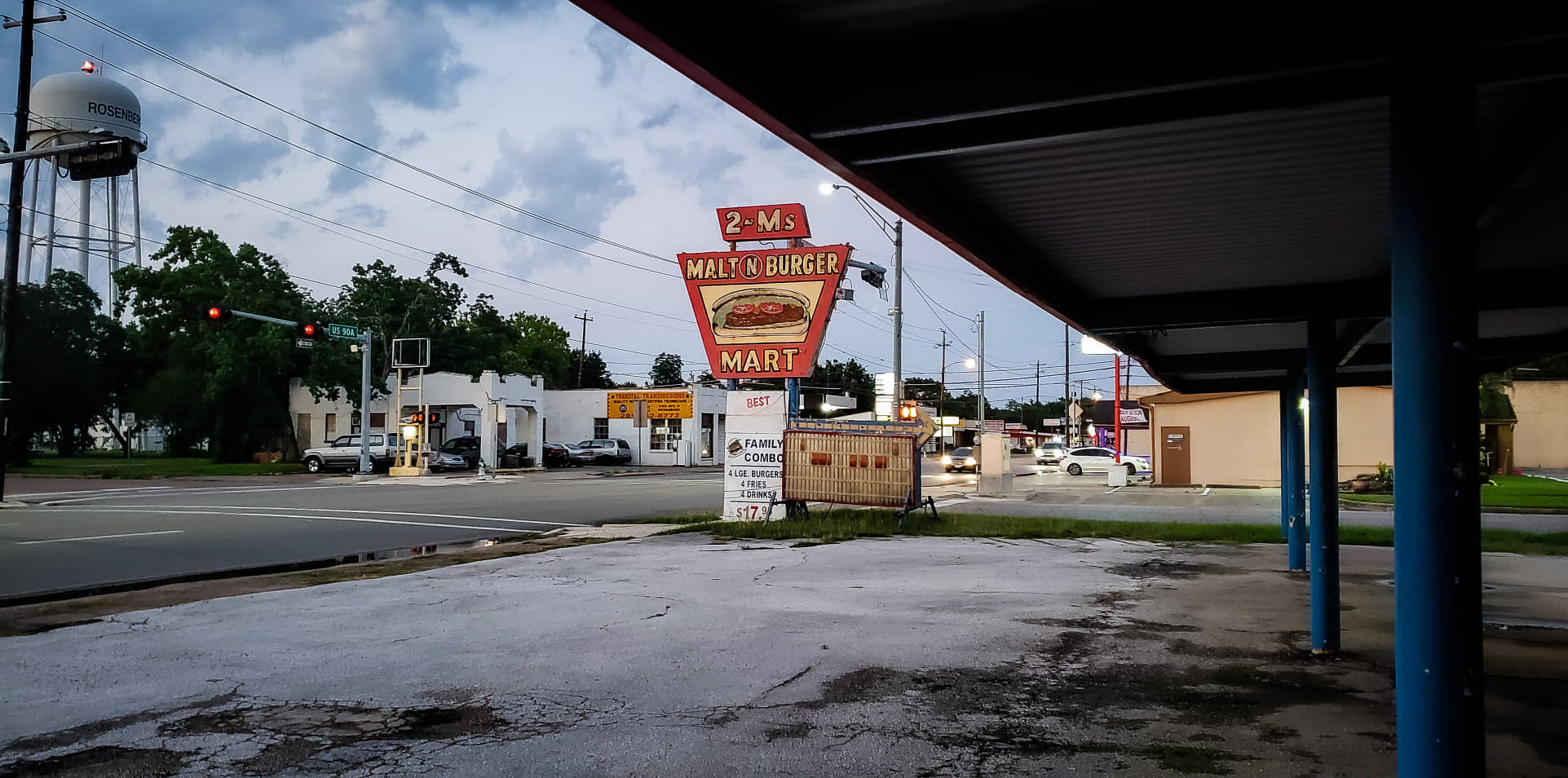
Location Detail
Artificial turf installation for Rosenberg residential properties along the US 59 corridor and older Fort Bend County neighborhoods.
Main Introduction
Rosenberg sits at the junction of US Highway 59 and the old Southern Pacific railroad corridor, and the residential character of its established neighborhoods reflects that history. The sections north of downtown Rosenberg — along Avenue H, the older Brooks Street blocks, and the tracts near the railroad right-of-way — are occupied by long-tenure Fort Bend County families in homes that range from 1950s bungalows to 1980s brick ranches. These are not master-planned HOA neighborhoods; they are city neighborhoods with a small-town pace and homeowners who have been keeping up the same properties for 20 to 40 years.
Artificial Turf of Pearland serves Rosenberg properties where the homeowner is thinking practically rather than aspirationally. The lots in established Rosenberg sections tend to be 6,000 to 10,000 square feet — large enough that mowing is a real obligation but modest enough that a focused turf installation on the front and side yard can be completed within a budget that makes sense for the property value. We do not push luxury-tier products on working-neighborhood projects.
Rosenberg's workforce commutes toward the Sugar Land commercial corridor, the Fort Bend County government jobs, and the US 59 commercial strip that runs northeast toward Houston. Drive times are longer than for Pearland or Sugar Land families. Coming home late on a weekday to a yard that needs to be mowed before the week is over is a friction point we remove with turf. The yard takes care of itself between debris-removal passes.
Local Challenges
Rosenberg's older neighborhoods sit on Brazos River alluvial soils that carry more organic material and vary more rapidly than the uniform Fort Bend clay farther east. In the sections close to Oyster Creek, alluvial deposit layers can create perched water tables that are invisible during dry site visits but appear after prolonged wet periods. We probe the installation zone at intake rather than relying on a city-wide soil assumption.
Some older Rosenberg lots have established pecan or live oak canopy that has been growing for 40 or more years. Root systems from these trees run extensively below the surface and can intercept base aggregate layers over time if the installation boundary is not kept at a safe distance from trunk bases. We map root interference zones during site assessment.
Older Rosenberg streets sometimes have city drainage infrastructure that runs in open concrete channel through the rear alley or along the property line. These channels carry both storm water and upstream drainage and can back up during heavy rain. We assess open channel adjacency for every Rosenberg installation and design the base slope to handle channel backup events without pushing water onto the turf surface.
Service Approach
For Rosenberg lots with alluvial soil variability, we probe multiple points across the installation zone rather than making a single assessment at the front of the lot. Where perched water table layers are identified, we add a vertical drain column at the low point of the base slope to provide an additional water exit that bypasses the perched layer.
For pecan and live oak canopy lots, we map the root interference zone during site assessment and establish the installation boundary at a radius that stays outside the primary root system. The exact boundary varies by tree age and trunk diameter; we photograph and document the decision so the homeowner has a reference for future landscaping decisions.
For lots adjacent to open concrete drainage channels, we design a slight berm at the channel interface — a 2-inch base height differential that prevents channel backup water from pushing backward onto the installation. This detail adds material cost but prevents the most common water-damage scenario in open-channel Rosenberg neighborhoods.
Benefits
For long-tenure Rosenberg homeowners who have been maintaining the same property for decades, turf is not a renovation decision — it is an exhaustion point. The yard has been mowed, edged, seeded, and patched through multiple drought cycles and flood events. A permanent surface that holds up through both extremes and requires minimal management is a logical next step for homeowners who are done fighting the lawn.
For Rosenberg families with US 59 or Sugar Land commutes, the removed mowing obligation is recaptured time that can go to school events, family evenings, or simply rest. The Fort Bend County commute pattern is long enough that coming home to outdoor obligations on weekday evenings is a quality-of-life friction point.
For properties near the Brazos River alluvial zone where standing water after rain is a recurring problem, correctly installed turf with proper base drainage reduces the window of unusable-yard time after rain events. The organic-rich alluvial soil that causes the worst standing-water problems also produces the best drainage performance when replaced with a properly designed aggregate base.
Scheduling Flexibility
Rosenberg is part of our Fort Bend County southwest routing circuit. We schedule Rosenberg projects on the same routing days as the Sugar Land and Stafford visits, which extends our Fort Bend coverage south.
Rosenberg projects that include open-channel berm construction or vertical drain column placement run one to two days longer than standard installations. We communicate the full timeline at intake so homeowners can plan around the extended work window.
Wet-season weather holds in Rosenberg — which sits near the Brazos River floodplain and can receive higher rainfall than Pearland during Gulf Coast events — are assessed by the Rosenberg radar zone specifically.
Process
Rosenberg projects begin with a multi-point soil probe, a canopy root zone map, and an open-channel adjacency assessment where applicable. We do not write the base specification until these three assessments are complete, because the soil variability in Rosenberg alluvial zones can change the spec meaningfully between the front and rear of the same lot.
Base preparation includes vertical drain column placement where perched water table layers are identified, channel berm construction where open channel adjacency is present, and root-zone boundary establishment where canopy trees are within 15 feet of the installation zone.
Installation proceeds after base confirmation. Seams are positioned away from the primary street view and away from canopy drip lines. Infill is distributed at a depth that accounts for pecan or live oak debris load where applicable. Closeout includes a multi-zone drainage check and a canopy boundary documentation handoff.
Nearby Areas
Rosenberg is the southwestern edge of our Fort Bend County routing. We reach it from the Pearland base via US Highway 90A and Fort Bend County roads, which gives us a direct route that does not require Gulf Freeway transit.
Services Offered
Location FAQ
Yes. These are areas we know. We probe the alluvial soil variability at each Rosenberg site rather than assuming a single city-wide specification.
Yes. Where perched water table layers are identified during probing, we add a vertical drain column at the base low point to bypass the perched layer. The drainage behavior of the turf surface is significantly better than natural grass on alluvial soil.
Yes. We map the root interference zone during site assessment and establish the installation boundary outside the primary root system. The boundary is photographed and documented.
Yes. We build a slight berm at the channel interface to prevent backup water from the channel from pushing onto the installation during heavy rain events.
Usually yes. We can walk through the mowing service cost comparison during the site visit. On a typical Rosenberg lot, the numbers favor turf within four to five years of installation.
Final CTA
Submit your project details for Rosenberg, TX. We will coordinate planning and scheduling based on your property requirements.
Call