
Step 1
Pet-Use Assessment
We observe and discuss the current yard use patterns, elimination zones, and dog traffic paths. This shapes the drainage concentration design and backing specification before material is ordered.
Loading...
Service Detail
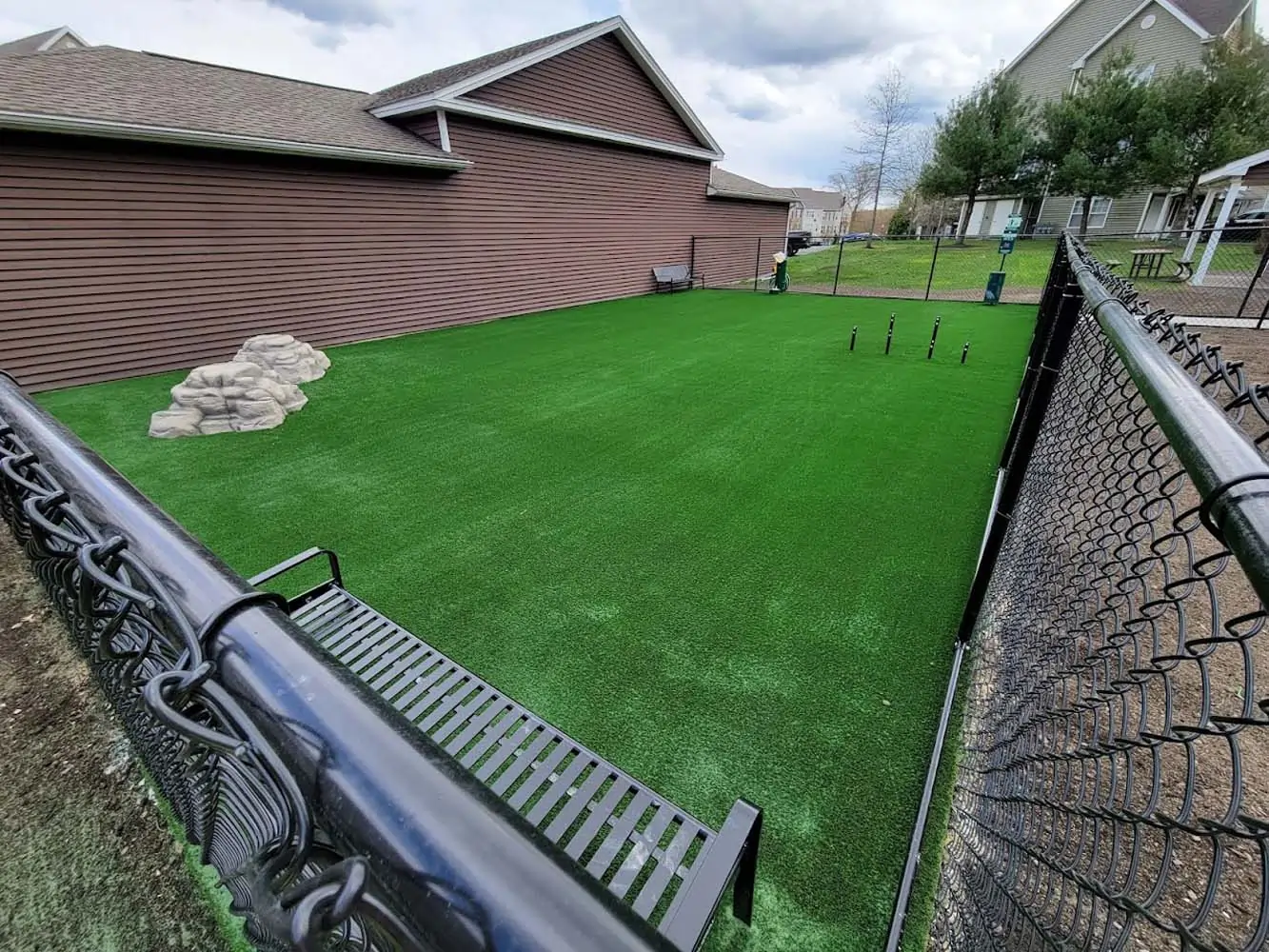
Pet-friendly artificial turf installation for Pearland and south Houston homes with dogs and outdoor pet areas.
Main Introduction
Dogs do things to Gulf Coast lawns that are hard to recover from. A 60-pound lab running the same perimeter path twice a day on Pearland sandy-clay will have a bare racetrack worn into the lawn within six months. A pair of dogs in an older Westwood backyard with intermittent shade and clay soil will have a muddy, pocked, uneven mess by the second spring. An active dog household in South Houston or Sagemont with a small-footprint clay backyard may already be mopping paws at the back door as a daily routine.
Pet-friendly turf installation at Artificial Turf of Pearland starts from the dog-use perspective rather than the cosmetic-lawn perspective. We assess where the dogs run, where they eliminate, how many dogs are in the household, and what the current surface condition tells us about traffic and waste concentration. That assessment shapes the drainage specification, the backing selection, and the infill choice for the pet zone.
The Pearland and south Houston market is not a luxury pet-turf market. It is a working-family market where dogs are house dogs, the backyard is the dog's primary exercise zone, and the homeowner wants a surface that is sanitary, durable, and easy to manage without becoming a second maintenance obligation. We scope pet-friendly installations for that reality: a surface that drains liquid waste fast, resists odor accumulation under normal Houston conditions, and holds up under daily dog traffic for the life of the product.
What Is Included
Pet-friendly turf installation at Artificial Turf of Pearland includes a pet-use assessment during the site visit, drainage specification calibrated to pet waste volume, backing selection for high permeability, infill selection for odor management, base preparation for the assessed soil type, turf installation, and a closeout that covers the pet-zone care routine.
The pet-use assessment shapes every subsequent decision. A household with two large dogs that eliminate in one corner of the yard gets a different drainage concentration design than a household with a small dog that roams the full yard. The backing permeability specification, infill type, and maintenance guidance are all calibrated to the actual pet-use pattern we observe and discuss during the site visit.
Closeout for pet-friendly installations includes a demonstration of the recommended rinse frequency and an explanation of which infill products require enzymatic treatment versus which manage odor passively. We do not hand a homeowner a generic maintenance card — we walk through the specific care routine for their specific pet zone.
Process Steps
Step 1
We observe and discuss the current yard use patterns, elimination zones, and dog traffic paths. This shapes the drainage concentration design and backing specification before material is ordered.
Step 2
Pet zones require higher drainage permeability than standard turf installations. We specify the backing product and base drainage slope based on the pet-use assessment rather than a standard residential specification.
Step 3
Base preparation uses the soil-type specification for the site — clay specification for South Houston and Pearland east-side lots, with drainage layer additions for high-traffic pet zones on clay soil.
Step 4
Pet-friendly turf is placed over the prepared base. Infill is distributed at a depth that supports fiber upright position under dog traffic while providing enough depth for odor management.
Step 5
We walk through the rinse frequency recommendation, the enzymatic treatment schedule if applicable, and the periodic inspection routine for high-concentration elimination zones.
Use Cases
Pet-friendly turf installation in the Pearland market is relevant for any household where dog traffic has already degraded natural grass or where muddy paw management is a daily household irritation. The most common situations are east-side Pearland clay-and-sandy-loam lots with active dogs and south Houston compact backyards where clay mud is a post-rain constant.
Older Pearland neighborhoods with clay-sandy-loam soil and active dogs where the turf is already compromised. The worn racetrack along the fence line and the muddy elimination corner are replaced with a durable, draining surface.
Small clay-soil backyards in Sagemont, Almeda, and the South Belt corridor where dogs turn the yard into a mud zone within 15 minutes of a rain event. Turf restores a usable, clean surface.
Households with two or more large dogs where waste volume creates odor and surface sanitation challenges that standard lawn maintenance cannot address. Drainage concentration design addresses high-volume pet use.
Dedicated dog-run or kennel areas where existing gravel or worn grass creates maintenance and sanitation problems. Turf over a properly designed drainage base provides a cleaner, more manageable surface.
Why Choose
The difference between a pet-friendly turf installation that works and one that creates odor problems within six months is almost entirely in the drainage design and the backing permeability selection. High-permeability backing that allows liquid waste to pass through quickly prevents odor-causing waste from accumulating in the infill layer. Incorrect backing selection — using a standard backing on a high-traffic pet zone — is the most common cause of post-install odor complaints.
Artificial Turf of Pearland selects backing products specifically for pet-zone drainage requirements based on the pet-use assessment we do at every site visit. We do not use a standard residential backing on a high-pet-traffic installation.
The other failure mode in pet turf — edge lifting from clay soil movement — is addressed through our soil-specific base preparation. Clay soil in South Houston and Pearland east-side lots requires deeper aggregate and geotextile separation to prevent the base from shifting as the clay cycles between wet expansion and dry contraction. An edge that lifts on a pet zone becomes a trip hazard and a cleaning nightmare.
Pricing Factors
Pet-friendly turf pricing is based on the pet-use assessment and soil-type specification. The backing product and base preparation cost for a high-pet-traffic installation are higher than standard residential turf cost, and we price these differences transparently so homeowners understand what they are paying for before committing.
Service Area Coverage
Pet Friendly Artificial Turf Installation is available across Pearland and surrounding communities. We serve east-side Pearland neighborhoods, Friendswood, Alvin, Manvel, Pasadena, South Houston, League City, Webster, Missouri City, Sugar Land, and Rosenberg.
Related Services
Frequently Asked Questions
If the drainage design and backing permeability are correct for the pet-traffic volume, odor should not develop under normal Houston conditions. We design the drainage concentration and backing specification based on the pet-use assessment at each site.
We recommend weekly rinse in high-traffic elimination zones and after any visible waste event. The specific frequency is discussed during the site-visit pet-use assessment and covered at closeout.
Yes, if designed correctly. Multi-dog high-volume households get a higher-permeability backing and a drainage concentration design that routes liquid waste away from the surface efficiently.
Edge lifting from digging is reduced by our perimeter installation approach, which uses bender board and nail-down securing at a depth that resists surface lifting. We cover edge security during the closeout walkthrough.
Clay soil that retains moisture can contribute to bacterial activity near the turf surface if drainage is not correct. We address this with geotextile separation and a drainage layer that keeps moisture moving through the base rather than pooling near the surface.
Final CTA
Submit the form with service type, property address, and timeline details. You can also call directly for scheduling support.
Call