
Step 1
Zone Depth Assessment
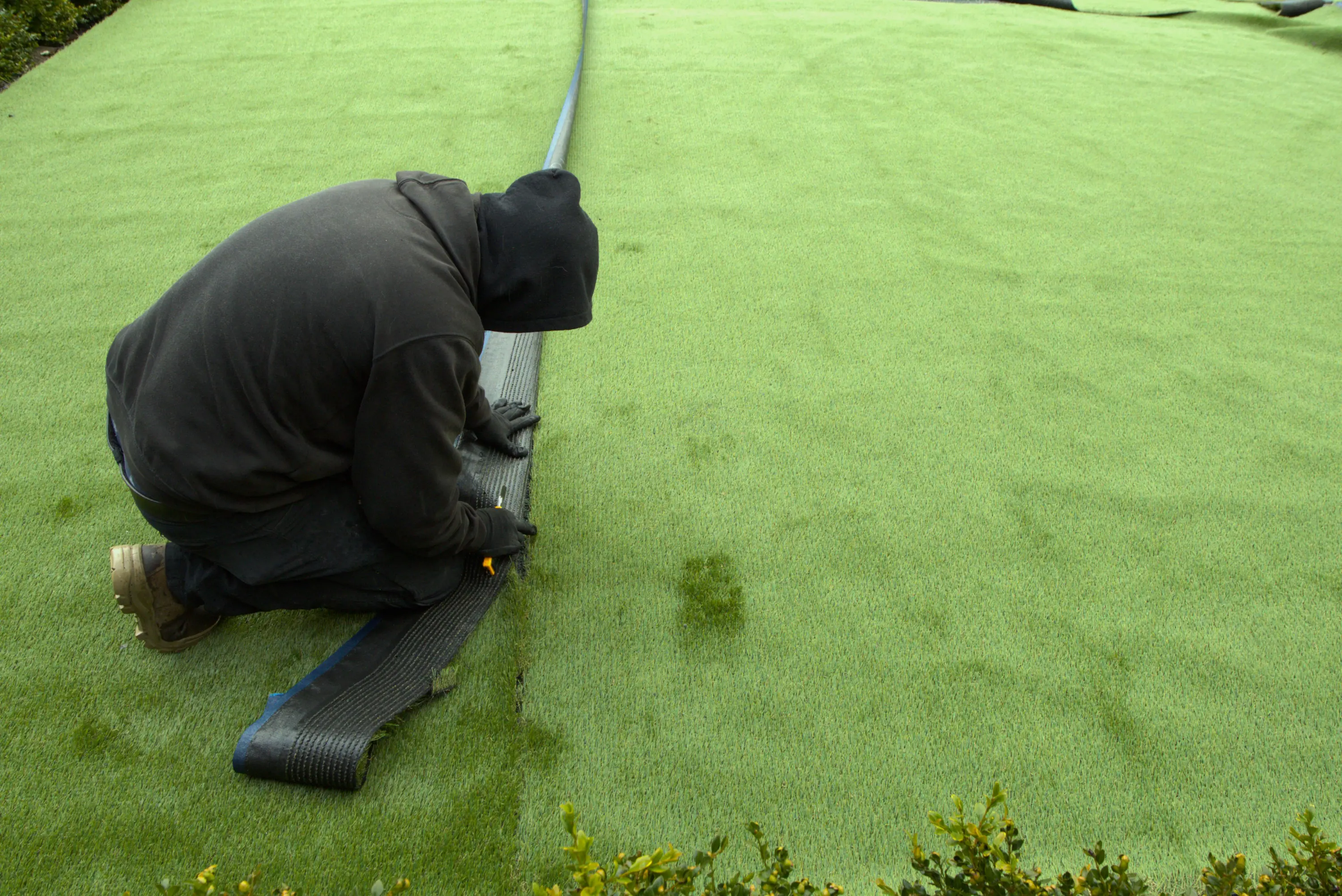
We probe infill depth at multiple points across the installation to map which zones are below specification and by how much. Traffic paths, pet zones, and play areas are the most common deficiency zones.
Loading...
Service Detail
Artificial turf infill replenishment for Pearland area residential and commercial installations that have lost infill depth.
Main Introduction
Infill depth loss is the most common maintenance issue on turf installations in the Pearland and south Houston market that have been in service for three or more years. Traffic compacts infill in high-use zones — the path from the back door to the garage gate, the center of a pet zone, the first three feet from the kids' play structure — while lower-traffic areas remain at full spec. The result is a surface that has inconsistent firmness, reduced drainage performance in high-compaction zones, and fiber that lies flat rather than standing upright in traffic paths.
Artificial Turf of Pearland provides infill replenishment services for installations that have lost depth in specific zones or across the full surface. The service includes a zone-by-zone infill depth assessment to identify where replenishment is needed, infill type matching to the original product where possible, replenishment distribution, and surface grooming to return the fiber to upright position.
Infill replenishment is a significantly lower cost than partial or full reinstallation. In most cases, an installation with good fiber integrity and intact backing can be restored to near-new surface performance with infill replenishment alone — no base work, no turf replacement. The service makes sense for any Pearland or south Houston installation where the turf looks flat or feels firm underfoot in traffic zones but the fiber and backing are still in good condition.
What Is Included
Infill replenishment at Artificial Turf of Pearland includes a zone-by-zone depth assessment using a probe to measure actual infill depth versus original specification, infill type identification and matching, replenishment distribution by zone, surface grooming to return fiber to upright position, and a post-service depth check.
The zone-by-zone assessment before replenishment is the key step. We do not add infill uniformly across the surface when only specific zones are below specification — that would add unnecessary material cost and produce a surface with inconsistent firmness rather than correcting it. The assessment maps which zones need replenishment and to what depth before any material is ordered.
Post-service depth check confirms that the replenishment has brought the surface back to within tolerance of the original specification. We do not close out an infill replenishment job without verifying the result.
Process Steps
Step 1
We probe infill depth at multiple points across the installation to map which zones are below specification and by how much. Traffic paths, pet zones, and play areas are the most common deficiency zones.
Step 2
We identify the original infill type from the product documentation or by visual inspection of the existing infill. Matching the replacement infill to the original type prevents surface inconsistency.
Step 3
Infill is added to deficient zones at the volume calculated from the depth assessment. We do not apply infill uniformly across zones that are still at specification.
Step 4
After replenishment, we groom the surface with a power brush to distribute infill evenly and return fiber to upright position in traffic-compacted zones.
Step 5
We probe infill depth in the replenished zones after grooming to confirm the surface is back within tolerance of the original specification before closing out.
Use Cases
Infill replenishment is relevant for any Pearland or south Houston turf installation that is three or more years into service and showing signs of traffic compaction — flat fiber in traffic paths, firmer surface underfoot in high-use zones, reduced drainage in pet zones, or visible matting where traffic is concentrated.
Pearland east-side and south Houston homes where the path from the back door to the gate or across the primary activity zone has compacted the infill flat. Replenishment restores surface cushion and drainage in the traffic path.
Pet zones where heavy daily traffic and waste-rinse cycles have compacted the infill below the drainage and odor-management specification. Replenishment restores drainage performance and fiber position.
Institutional and community sports surfaces where concentrated contact in specific field zones — goalmouth areas, baseline turns — has compacted infill below the safety specification.
Installations approaching five to seven years in service that have lost infill uniformly across the surface from normal traffic and weather cycling. Full-surface replenishment extends installation life significantly at a fraction of reinstallation cost.
Why Choose
Infill replenishment is the most cost-effective maintenance service available for an existing turf installation in the Pearland market. A residential installation that has good fiber integrity and intact backing but has lost infill depth in traffic zones can be restored to functional performance for a fraction of the cost of reinstallation — and the restored surface will typically last another three to five years before the fiber itself reaches end of life.
Artificial Turf of Pearland provides zone-targeted replenishment rather than uniform surface application. Uniform application adds unnecessary material cost on surfaces where only specific zones are deficient, and it can produce inconsistent surface firmness if the baseline depth varies significantly between zones. Zone-targeted replenishment is more accurate and more cost-effective for the property owner.
We also match infill type rather than substituting a different product because mixing different infill types — particularly mixing crumb rubber and sand — produces inconsistent surface performance and can affect drainage behavior.
Pricing Factors
Infill replenishment pricing is based on the zone assessment findings. Zone-targeted replenishment for a typical residential installation with two to three deficient zones is priced from the volume calculation at assessment. Full-surface replenishment pricing is based on the total square footage and uniform depth deficiency identified.
Service Area Coverage
Artificial Turf Infill Replenishment is available across Pearland and the south Houston service area. We service installations in Friendswood, Alvin, Manvel, Pasadena, League City, Webster, South Houston, Missouri City, Sugar Land, and Rosenberg.
Related Services
Frequently Asked Questions
Signs include fiber lying flat in traffic paths, the surface feeling firmer than it did when new, reduced drainage in pet zones, or visible matting where traffic is concentrated. We can assess infill depth during a site visit.
Yes, where possible. Mixing different infill types can produce surface inconsistency and affect drainage behavior. We identify the original infill type before ordering replacement material.
If the odor is caused primarily by infill compaction that has reduced drainage, replenishment may reduce odor by restoring drainage performance. If the odor is in the base layer below the infill, replenishment alone will not solve it — the base layer needs to be addressed.
Under normal residential use, infill replenishment in high-traffic zones is typically needed every three to five years. Pet zones may need replenishment more frequently depending on pet traffic volume.
Yes. We assess existing installations regardless of the original installer and provide replenishment based on the zone depth assessment.
Final CTA
Submit the form with service type, property address, and timeline details. You can also call directly for scheduling support.
Call